Ordre des urbanistes du Québec

Mandate
Our mandate was to deliver a complete redesign of the OUQ website. The previous platform did not do justice to the complexity and importance of the Order’s role. The admissions journey, the public-protection mission, and all professional obligations were difficult to understand for audiences who often have only one chance to find their way—whether to file a complaint or to begin an admissions process.
Objectives
- Clarify and structure regulatory and institutional information
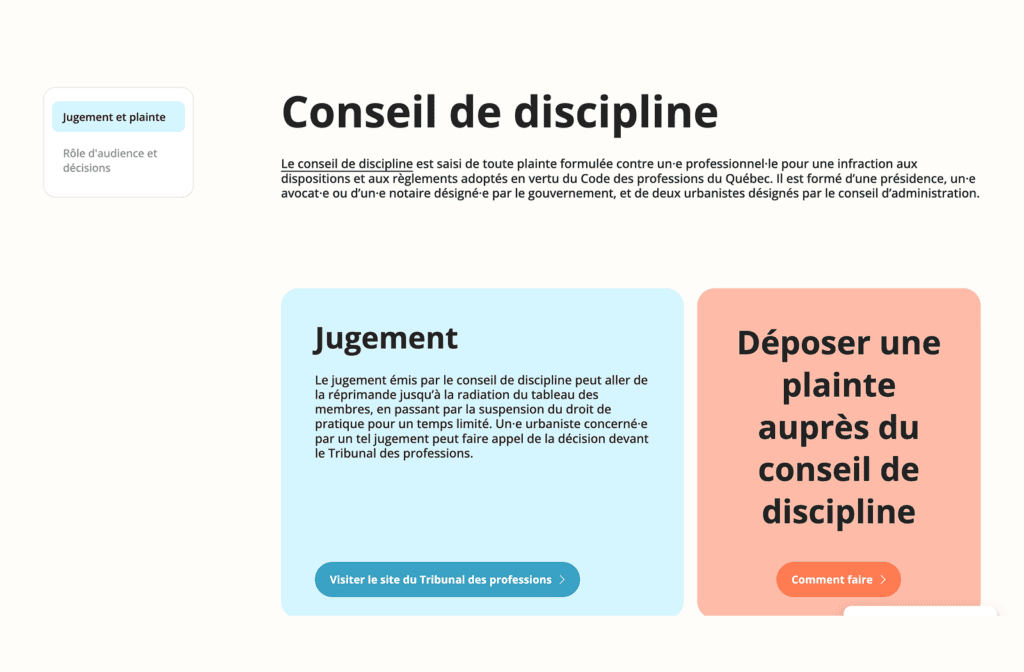
make the admissions journey, the public-protection role, and professional obligations easier to understand through simplified information architecture, anchor navigation on pages where content may be denser, plain-language writing, and guided user journeys. - Strengthen the discoverability of training and events
highlight the continuing education offering and the events calendar through a simple, effective presentation. - Increase the reach of the Urbanité magazine
lay a flexible foundation for a content space that can evolve and better showcase the magazine within the community. - Improve the user experience and the Order’s digital identity
deliver a consistent, modern, inclusive visual interface, with smooth navigation on desktop and mobile, to strengthen the institution’s credibility.
A redesigned showcase for training and the Urbanité magazine
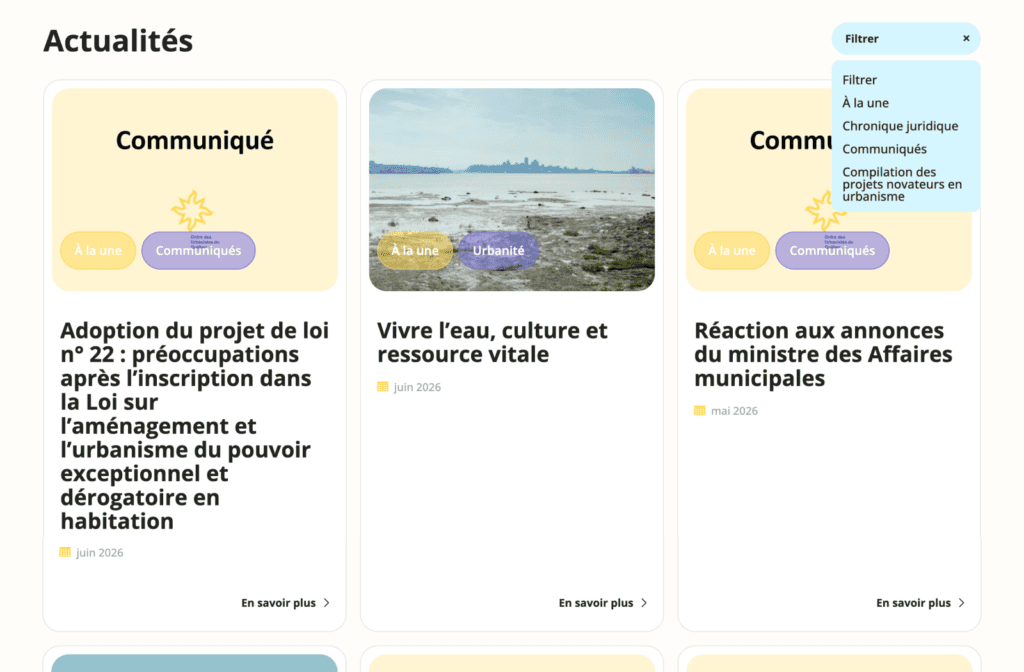
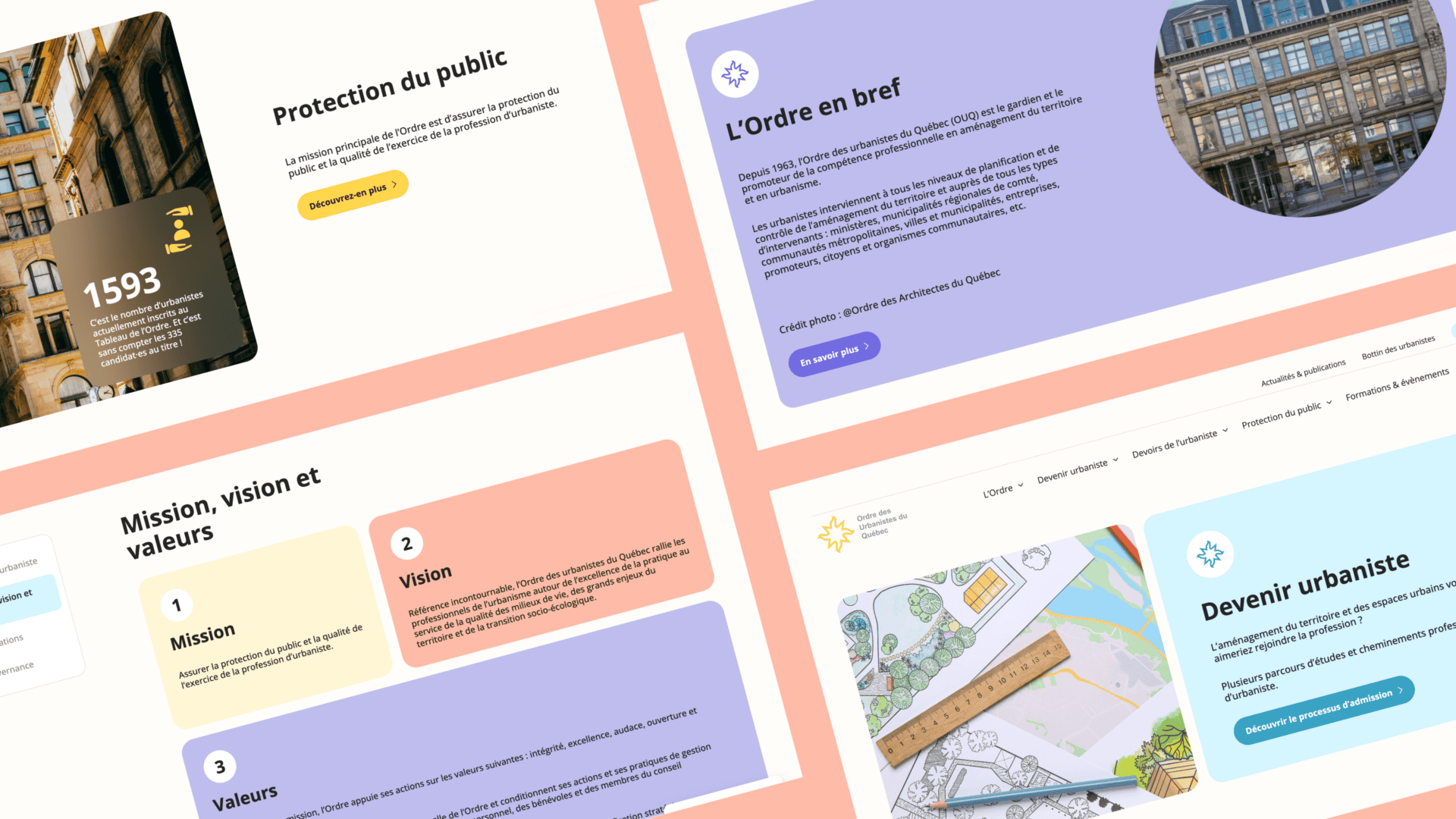
Continuing education is a point of pride for the Order, but it was previously not well showcased. We therefore designed an effective presentation of the training and events catalogue on the main site, with a direct link to the transactional platform, to improve discoverability without duplicating the existing infrastructure. In parallel, we built the foundations for a content space designed to evolve over time and give greater visibility to the Urbanité magazine within the urban planning community.


A modern digital identity inspired by the sector’s best practices
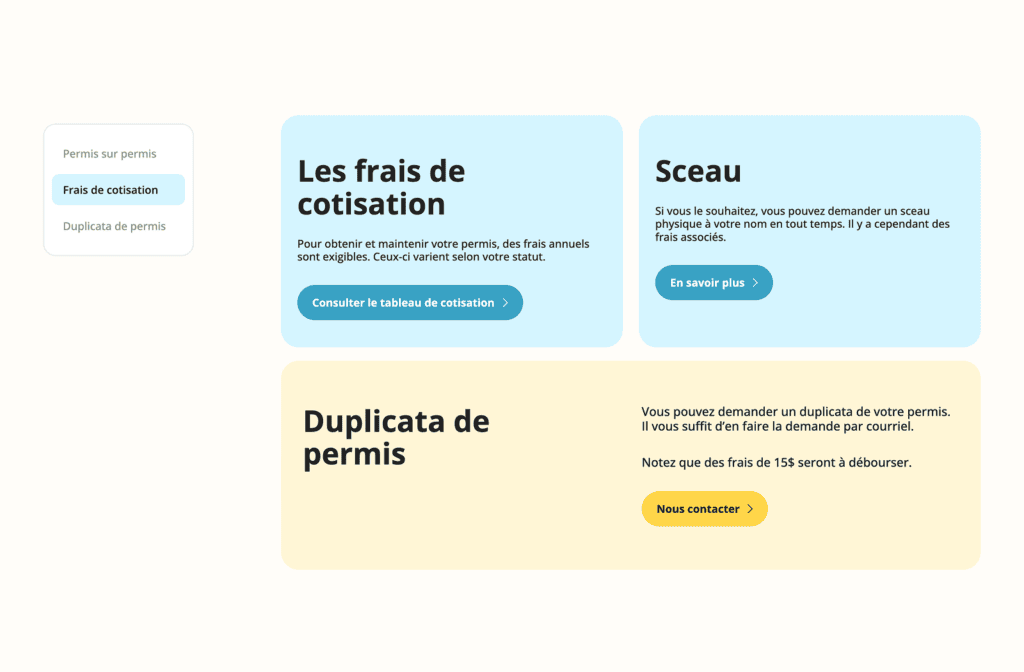
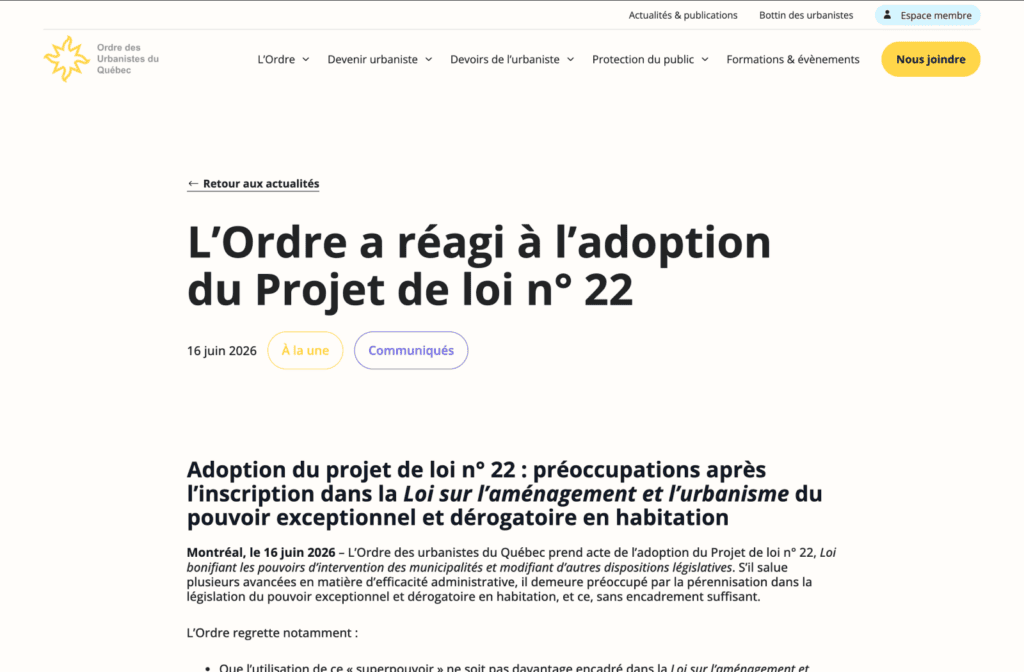
For an organization whose mission is grounded in protecting the public, the site’s visual credibility is almost as important as its content. We therefore proposed a professional art direction, with colour accents that help humanize regulatory material that is often austere. The interface was designed to be accessible and inclusive, with particular attention to content readability and to navigation—smooth and adaptive between desktop and mobile—so that every audience, from seasoned urban planners to prospective candidates, can find what they need easily.


A clear entry point for professional involvement
Proposing a topic for the Urbanité magazine, joining a committee, serving on the board of directors: there are many ways to contribute to the profession’s profile at the OUQ, but they were previously hard to find on the site. We addressed this by giving these opportunities a prominent place right from the homepage, with a “Get involved” section that presents, at a glance, the different ways to contribute to the Order. The result: an urban planner who wants to get involved now knows exactly where to go and how to take action.