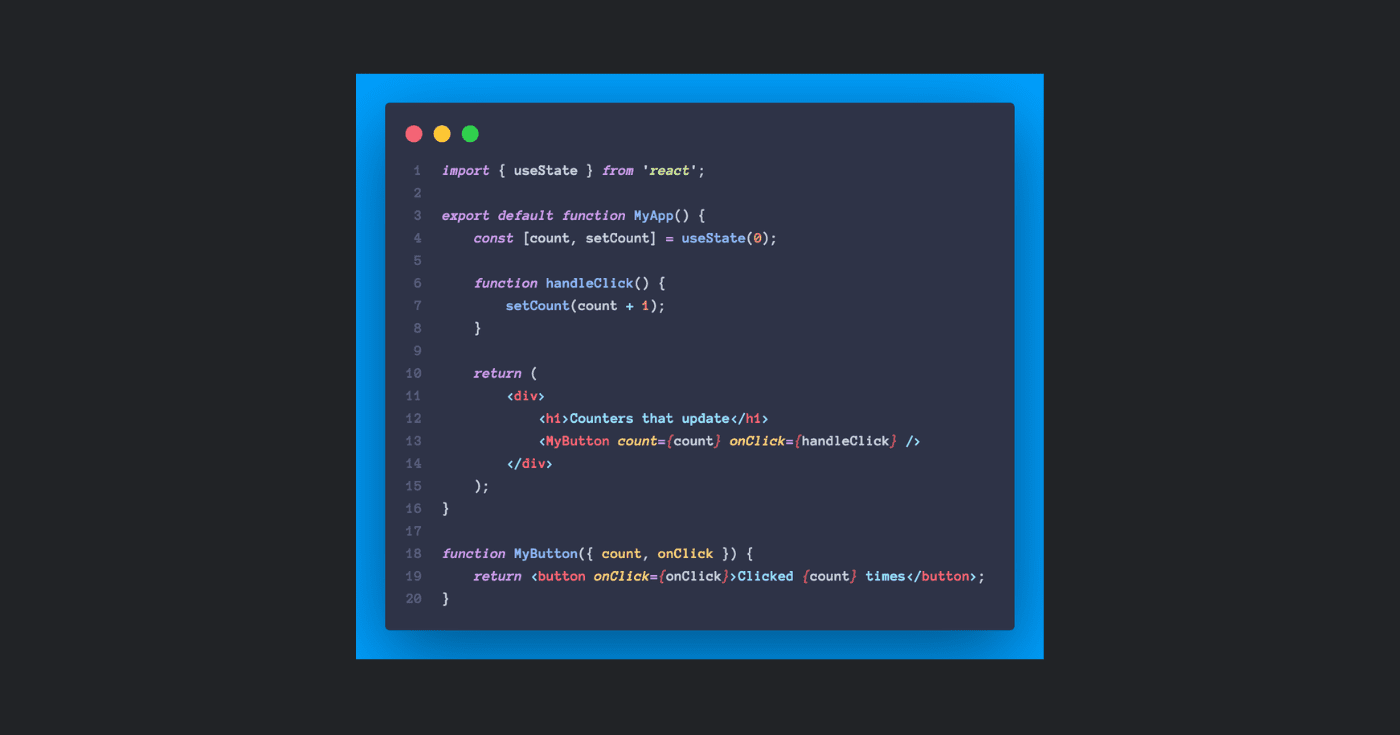
This article is specifically intended for developers who already have a foundation in web development.
In the vast field of web development, where creative minds and talented coders meet to shape the future of the web, JavaScript frameworks play a crucial role. Imagine them as a sophisticated toolbox, full of resources and features to simplify and optimize the web application development process. Choosing the right JavaScript framework is like finding the right equipment to build a solid house: it ensures that your project holds up, performs well, and lasts over time. In this article, we will explore some of the most prominent JavaScript frameworks in 2024 that are shaping the modern web development landscape.
React.js
Recognized as a pillar of web development, React.js, created by Facebook, offers a powerful declarative approach for building dynamic user interfaces. Its popularity is based on its high performance, flexibility, and flourishing ecosystem. With the introduction of React 18, continuous improvements further strengthen its capabilities, making it a solid choice for large-scale projects.
React.js is used by many popular websites, including:
- Facebook: The social platform itself is built with React.js, demonstrating its reliability and ability to handle billions of users and real-time interactions.
- Instagram: This photo and video sharing application also uses React.js for its fluid and responsive user interface.
- Airbnb: The famous home-sharing service uses React.js to provide an intuitive and personalized user experience to its millions of users.

Next.js
Next.js, based on React, stands out for its native support for server-side and client-side rendering, offering optimal performance and a fluid user experience. Next.js is a popular choice for professional-grade projects, thanks to its reliability and adaptability, which is suitable for both web and mobile applications. Unlike React.js, Next.js offers additional features such as built-in server-side rendering, simplified infrastructure management, and dynamic routes, making it an ideal solution for projects requiring advanced structure and efficient management of application routes and states. However, since Next.js is based on React, developers familiar with React will find the code to be relatively similar, facilitating the transition to and learning of Next.js.
Next.js is used by many popular websites, including:
- Netflix: The streaming service uses Next.js for its responsive user interface and efficient content management.
- Hulu: Another video streaming platform that uses Next.js to provide a fluid and personalized user experience.
- Twitch: The live streaming platform uses Next.js to offer optimal performance and fluid navigation to its millions of users.

Vue.js
With its progressive philosophy and intuitive syntax, Vue.js is attracting more and more developers. Its ease of use, combined with improved performance with the release of Vue 3, makes it an attractive choice for projects of all sizes. Vue.js continues to gain popularity thanks to its active community and exhaustive documentation.
If you are a fan of this framework, there is also Nuxt.js, which offers a Vue.js development framework based on the same conventions, facilitating the creation of modern and universal web applications. Unlike Vue.js, Nuxt.js includes features such as built-in server-side rendering and automatic routing, making it an ideal solution for projects requiring a robust structure and easy management of complexity.
Vue.js is used by many popular websites, including:
- GitHub: The famous development platform uses Vue.js for its responsive user interface and ease of use.
- Adobe: The software company uses Vue.js for some of its web applications, demonstrating the flexibility and capabilities of this framework.
- OpenAI: The artificial intelligence research organization uses Nuxt.js for certain aspects of its website, demonstrating the adaptability and performance of this framework.

Angular
Angular, developed by Google, is a robust and comprehensive framework, ideal for complex and scalable web applications. Its structure based on the MVC (Model-View-Controller) model offers a clear separation of concerns and facilitates component management. With the release of Angular 17, performance improvements and new features strengthen its position as a preferred choice for large-scale projects.
Angular is used by many renowned companies for their websites and mobile applications, including:
- Google: The parent company that developed Angular uses this framework for several of its products and services, including Google Analytics and Google Cloud Platform.
- Ticketmaster: The famous ticket sales platform uses Angular for its responsive user interface and advanced event management features, providing a fluid user experience to its millions of users.

Svelte
Svelte stands out for its innovative approach to compilation at build time, resulting in faster and lighter applications. Its concise syntax and ease of use make it an attractive choice for performance-conscious developers.
Svelte is used by several popular websites and mobile applications, including:
- New York Times: The famous newspaper uses Svelte for parts of its website, demonstrating the reliability and flexibility of this framework.
- Square: The payment company uses Svelte for its responsive user interface and optimized performance, providing a fluid user experience to its users.

In conclusion, the choice of JavaScript framework depends on the specific needs of each project, as well as the preferences and expertise of the development team. Whether you opt for React.js, Next.js, Vue.js, Nuxt.js, Angular, or Svelte, the important thing is to choose a suitable framework that meets the functional and technical requirements of your project.
To discover even more interesting things and resources on web development, I invite you to check out the article How ChatGPT Changed the Way I Work as a Web Developer